
 In your quote
In compare
Special and Cordless Industrial Vacuums
183 products · Industrial Vacuums
Special and cordless industrial vacuums are designed for situations where an ordinary vacuum is not enough: hazardous dust, explosive atmospheres, continuous use and jobs where there is no mains power. They are machines for industry, workshops and building sites that require reliable filtration.
Types of vacuum available
- ATEX explosion-proof vacuums: for collecting dust in areas at risk of explosion.
- Vacuums for hazardous dust: in filtration class M or H, with filter-cleaning systems.
- Industrial vacuums for continuous use: large tanks for intensive work.
- Cordless vacuums: easy to handle, with interchangeable batteries, for working without a cable.
- Accessories and spare parts: filter bags, filters and nozzles.
Brands included are Nilfisk, Kärcher, Makita, Milwaukee, DeWalt, Stanley, IPC Worldwide and Sea Technology.
How to choose the right vacuum
Start with the type of dust to be collected and the filtration class required, then check whether the working environment is classified as at risk of explosion: if so, a model with ATEX certification for the relevant zone is needed. Also consider the tank capacity and, for cordless versions, the battery life and the battery system already in use.
To choose with confidence, the AMES team will help you find the right model: request a quotation.
Active filters:
Products in this collection
In your quote
In compare
 In your quote
In compare
 In your quote
In compare
 In your quote
In compare
 In your quote
In compare
 In your quote
In compare
 In your quote
In compare
 In your quote
In compare
 In your quote
In compare
 In your quote
In compare
 In your quote
In compare
 In your quote
In compare
 In your quote
In compare
 In your quote
In compare
 In your quote
In compare
 In your quote
In compare
 In your quote
In compare
 In your quote
In compare
 In your quote
In compare
 In your quote
In compare
 In your quote
In compare
 In your quote
In compare
 In your quote
In compare
 In your quote
In compare
Frequently asked questions: Special and Cordless Industrial Vacuums
When is an ATEX explosion-proof vacuum needed?
An ATEX vacuum is needed where explosive dust or gases can form in the air, as in some processes involving wood, plastic or metal powders. The model must be chosen according to the classification of the area, which the employer defines in the risk assessment document. A standard vacuum in these areas can trigger an explosion.
What is the difference between a vacuum for hazardous dust and a standard one?
A vacuum for hazardous dust has an M or H class filter, which retains very fine particles, and often an automatic filter cleaning system. A standard one lets some fine dust pass through, which returns to the environment. For harmful or sensitising materials, a machine with suitable filtration and a sealed container is recommended.
Which battery vacuum should I choose for a site without mains power?
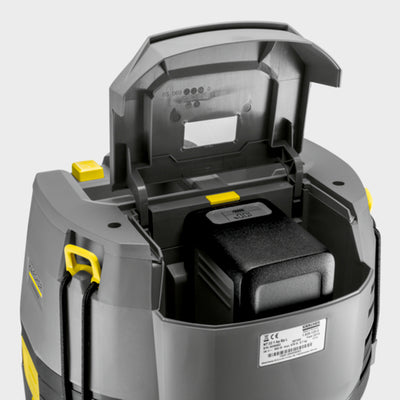
Where there is no mains supply, a battery vacuum can be used, such as the DeWalt XR Lithium 18V Class L solids and liquids vacuum, in bare-tool version, or the Stanley FMC795B 18V solids and liquids vacuum. Check that the battery is compatible with other tools in the same line, as each brand uses different packs. Check the data sheet to see whether the battery and charger are included.
What is an extraction system for continuous work used for?
An extraction system such as the Nilfisk FES223BI Z22 extraction system is designed for continuous use, connected to the machine that produces dust, such as a sander or a workbench. It captures dust at source and allows the filter to be emptied without stopping work. For hazardous dust, the filter must be replaced according to the manufacturer's instructions.
How do I choose the suction power for a site vacuum?
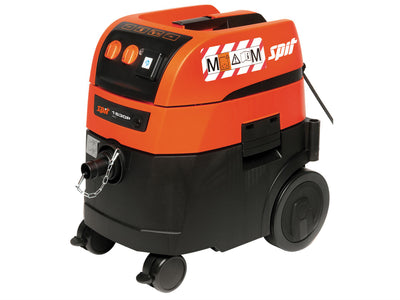
Look at the air flow rate and the vacuum (negative pressure) figures given in the data sheet, rather than the wattage alone. For chases, holes and small clean-ups, a site vacuum such as the SPIT Ac 1630 Ph site vacuum is enough. For demolition and continuous work over several hours, consider models with a larger tank and automatic filter cleaning, so the machine does not have to stop to be emptied.
Which regulations cover dust on site when vacuuming?
D.Lgs. 81/2008 (the Italian workplace safety law) requires the employer to assess the risk from dust and to choose suitable equipment, with protection for workers. For silica dust, present in concrete and plaster, the decree provides specific prevention measures. In places with a risk of explosion, Title XI of the same decree applies. Ask the safety officer which protection to use.
How do I use a battery or ATEX vacuum safely?
Check the battery condition before starting and do not recharge it in areas with accumulated dust. In ATEX models, do not open the container or change the filter in a classified area without the prescribed procedures. Empty the filter wearing gloves and a mask, and follow the manufacturer's instructions for periodic maintenance.