
 In your quote
In compare
VDE 1000V Equipment: Insulated Tools for Electrical Installations
59 products · Hand Tools for Construction
VDE insulated tools are used to work on live electrical installations while reducing the risk of electric shock. They are tested to standard EN 60900 for voltages up to 1000 V AC (1500 V DC).
What you will find in the collection
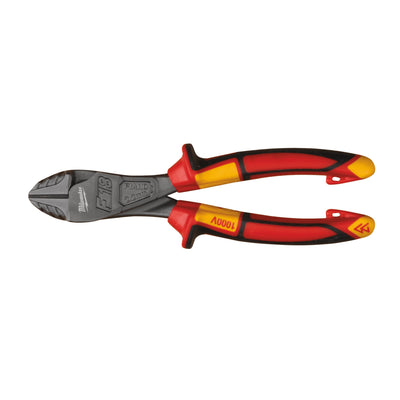
- Insulated pliers and cutters: universal pliers, wire strippers and cutters with insulated handles.
- Insulated screwdrivers: ranges, sets with interchangeable inserts and precision screwdrivers.
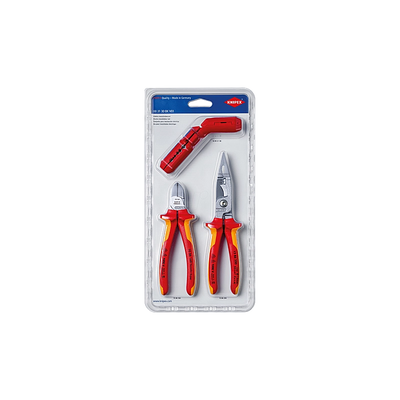
- Mixed sets in a pouch or case, ready for the electrician.
- Electrical insulating gloves and protective over-gloves, to complete the safety kit.
How to choose
Always look for the VDE marking with the double-triangle symbol and the 1000 V indication on the tool. Choose the set according to the jobs you do most often: for panels and terminal blocks you need screwdrivers in various sizes and a wire stripper. Before every use, check that the insulation is intact and replace the tool if it is cut or chipped. Insulating gloves must be chosen by voltage class and stored without folds.
Tell us which tools you need and in what quantity: AMES will prepare a tailor-made quotation.
Active filters:
Products in this collection
In your quote
In compare
 In your quote
In compare
 In your quote
In compare
 In your quote
In compare
 In your quote
In compare
Unifix
Insulated combination pliers, Series G10-18, Unifix
Code unifix-seria-g10-18-pinze-combinate-isolate
 In your quote
In compare
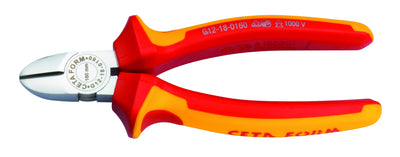
Unifix
Insulated diagonal cutting nippers G12-18-0160 Unifix
Code unifix-g12-18-0160-tronchesino-taglio-diagonale-is
 In your quote
In compare
 In your quote
In compare
 In your quote
In compare
 In your quote
In compare
 In your quote
In compare
 In your quote
In compare
 In your quote
In compare
Unifix
Set of insulated slotted/Phillips screwdrivers C-PLUS G99-701 Unifix
Code unifix-g99-701-set-cacciaviti-isolati-a-intaglio-p
 In your quote
In compare
Unifix
Set of insulated slotted/Phillips screwdrivers C-PLUS G99-401 Unifix
Code unifix-g99-401-set-cacciaviti-isolati-a-intaglio-p
 In your quote
In compare
 In your quote
In compare
 In your quote
In compare
 In your quote
In compare
 In your quote
In compare
 In your quote
In compare
 In your quote
In compare
 In your quote
In compare
 In your quote
In compare
 In your quote
In compare
Frequently asked questions: VDE 1000V Equipment: Insulated Tools for Electrical Installations
What does a VDE 1000 V insulated tool mean?
A VDE insulated tool is designed to work on live installations up to 1000 V AC and 1500 V DC. The items are tested according to the EN 60900 standard. The insulation reduces the risk of electric shock, but it does not replace verifying the absence of voltage whenever that is possible.
Which insulated tools are available for electricians?
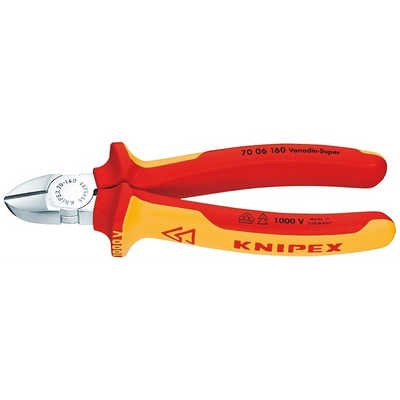
The collection includes insulated pliers and cutters, such as the diagonal cutting pliers item 7006 or the Stanley FATMAX insulated universal pliers. There are also insulated screwdrivers, individually or in sets of 5, 6 or 9 pieces, and sets with a tester. The range is completed by insulating electrical gloves and protective over-gloves.
How do I choose between an insulated slotted screwdriver and a cross-head one?
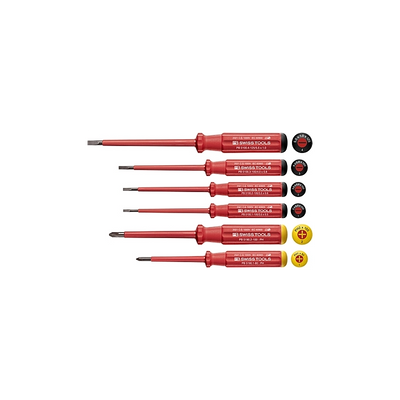
The insulated screwdriver should be chosen according to the type of screw and the tip. The collection includes slotted models, such as the Swiss Tools 5100 PB, and PH cross-head models, such as the Swiss Tools 5190 PB, as well as the sets that combine them. Always use the tip of the correct size, because an unsuitable tip damages the screw head and can slip.
How do I check the condition of the insulation on a VDE tool?
Before using an insulated tool, check that the sheath on the handles and blades is not cut, cracked or worn. If the insulating part is damaged, the tool is no longer reliable and must be replaced. Do not use it at voltages higher than those for which it is rated.
Is a set with a tester and case useful for work on site?
Sets with a tester, such as the Stanley sets of 6 and 9 screwdrivers, and sets in a pouch or carry case keep the kit together in a single container. The tester must be checked before each use. Keeping the set in its pouch keeps the tools clean and easy to find, even on a site with many activities.
Who uses VDE tools and for what jobs?
They are used by electricians, industrial maintenance technicians, switchboard installers and technicians working on installations in service. They are used to work on terminals, terminal blocks and components when the procedure allows it, without de-energising the entire circuit. The company's safety procedures remain the main reference.
How do I use these tools safely on live installations?
Work on live installations only if you have the training and the procedures required, and use PPE (personal protective equipment) such as insulating gloves and goggles. Italian Legislative Decree 81/2008 on workplace safety requires a risk assessment for electrical work as well. Keep handles dry, avoid damaged tools and do not touch exposed metal parts.