
 In your quote
In compare
Carvel
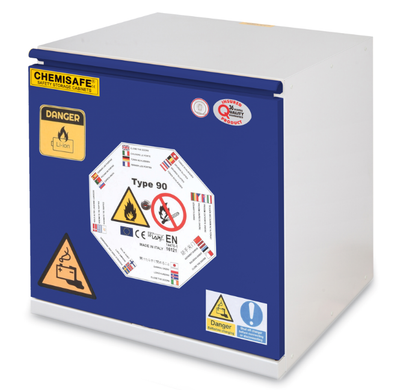
Safety cabinet for lithium batteries 1 door with base sump 590x520x720 mm Carvel
Code ARM005LIT
17681 products
The mechanical engineering industry works every day with tools, compressed air, abrasives and protective equipment. This collection brings together what production, maintenance and assembly departments need.
In your quote request, state the quantities, models and brands you need: we will reply with availability and equivalent alternatives. AMES sells by quotation only: write to us and we will send you an offer tailored to your job.
In your quote
In compare
 In your quote
In compare
 In your quote
In compare
 In your quote
In compare
 In your quote
In compare
 In your quote
In compare
 In your quote
In compare
 In your quote
In compare
 In your quote
In compare
 In your quote
In compare
 In your quote
In compare
 In your quote
In compare
 In your quote
In compare
 In your quote
In compare
 In your quote
In compare
 In your quote
In compare
 In your quote
In compare
 In your quote
In compare
 In your quote
In compare
 In your quote
In compare
 In your quote
In compare
 In your quote
In compare
Socket wrenches are chosen by square drive size, for example 1/4 or 3/8 inch, and by the range of socket sizes. A 23-piece set with a 72-tooth reversible ratchet, with sockets from 4 to 14 mm, covers the most common sizes. The number of ratchet teeth affects the swing angle, so it is worth checking before you buy.
The filter regulator reduces the pressure and stabilises it at the value the tool needs. The version with lubricator adds an oil mist, useful for air tools that run continuously, while the plain version is suitable when lubrication is not needed. Check the port size, here 3/8 inch, and the maximum working pressure.
Cutting discs are chosen by diameter, thickness and the material to be cut. The Forza 115 mm disc with a thickness of 1.6 mm is designed for steel and stainless steel, and is available in a promo pack of 55 pieces. The diameter must match the angle grinder, such as 115, 125 or 230 mm, and the disc must always be used with the guard fitted.
DIN 933 fully threaded hex head screws in A2 stainless steel are designed for joints that remain exposed to damp. They are chosen by diameter, length and pitch, which must be matched with nuts and washers. A2 steel is one of the most common stainless steel grades, but for aggressive environments it is advisable to ask for technical advice.
Every chain and hook is marked with a maximum working load limit, which must never be exceeded. Before use, check for deformation, wear or cracks on links and hooks, and never use an open or bent hook. For lifting operations, D.Lgs. 81/2008 (Italian Legislative Decree 81/2008 on workplace safety) requires training and periodic inspections of the equipment.
The penetrating oil seeps into rusted threads and makes them easier to unscrew, while a multi-purpose lubricant keeps mechanical parts moving. The catalogue includes Svitol penetrating oil for this use. Spray a little at a time, wait a few minutes and work in a ventilated area, wearing gloves and safety glasses.
For hands, use mechanic's gloves compliant with standard EN 388, which rates resistance to abrasion, cut, tear and puncture. For eyes, safety glasses compliant with standard EN 166 are needed. Choose the protection according to the risk of the task, because a glove suited to grinding is not always suited to assembly.
The 24-litre wheeled sprayer, with level indicator, coiled hose and spray gun, is used to apply liquids to surfaces or machinery. Besides the capacity in litres, consider the type of gun, the hose length and how easy the trolley is to move. The oiler with brass pump, on the other hand, is designed for manual lubrication of specific points.
We use essential cookies to make the site work, and, only with your consent, analytics and marketing cookies to understand how it is used and to offer you relevant content. You can change your mind at any time. Read the privacy policy
For purchasing offices and MRO buyers
Search by task
Thank you! Your request has reached one of our buyers: we'll reply within 24 working hours with the quote or with any questions needed to complete it.