
 In your quote
In compare
Stanley and DeWalt Utility Knives
32 products
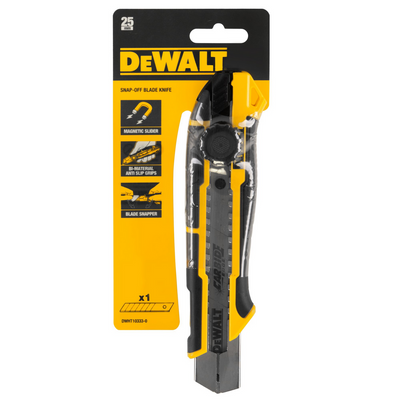
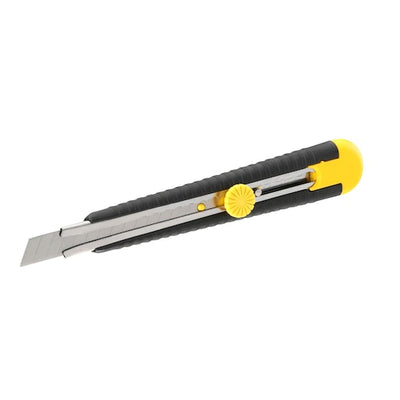
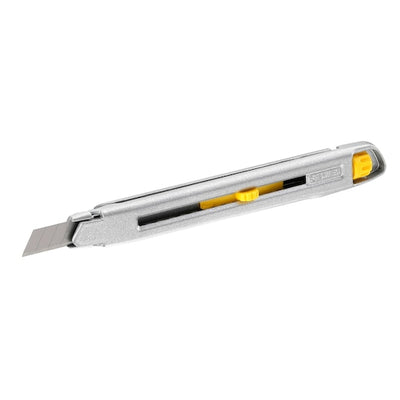
This collection brings together utility knives from the Stanley and DeWalt lines, designed for heavy use on site and in the workshop: sturdy body, ergonomic grip and a segmented blade that snaps off when it wears.
Types in the collection
- Knives with a blade-locking wheel (Stanley, DeWalt)
- Metal auto-lock knives, 25 mm (DeWalt)
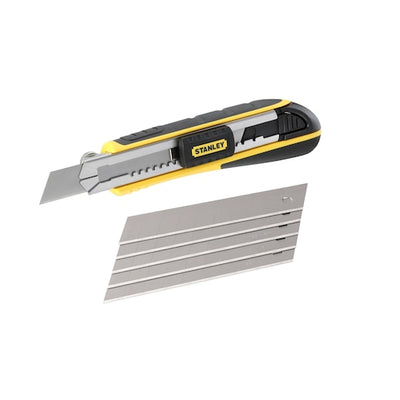
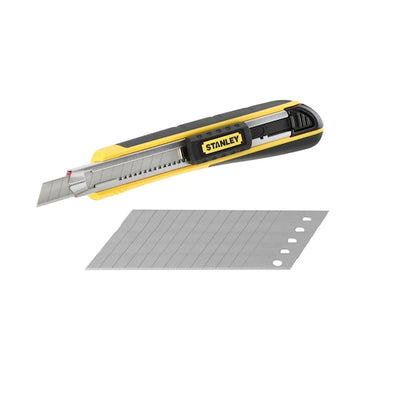
- FatMax single-blade knives, 25 mm (Stanley)
- Knives with built-in blade snapper and compartment for spare blades
How to choose
Choose the 18 mm blade for general use and the 25 mm one for heavy cuts. A metal body lasts longer, a bi-material one is more comfortable in prolonged use. The wheel lock or auto-lock keeps the blade still during cutting. Replacement blades are in a separate collection.
For use on site it is best to choose a model with a compartment for spare blades, so the replacement is always to hand.
For models and availability, write to or call AMES Srl: we will prepare a quote for you.
Active filters:
Products in this collection
In your quote
In compare
 In your quote
In compare
 In your quote
In compare
 In your quote
In compare
 In your quote
In compare
 In your quote
In compare
 In your quote
In compare
 In your quote
In compare
 In your quote
In compare
 In your quote
In compare
 In your quote
In compare
 In your quote
In compare
 In your quote
In compare
 In your quote
In compare
 In your quote
In compare
 In your quote
In compare
 In your quote
In compare
 In your quote
In compare
 In your quote
In compare
 In your quote
In compare
 In your quote
In compare
 In your quote
In compare
 In your quote
In compare
 In your quote
In compare
Frequently asked questions: Stanley and DeWalt Utility Knives
Which utility knife should I use for cutting on site?
A utility knife is used to cut cardboard, carpet, membranes, plastics, upholstery fabric and thin materials on site or in the workshop. A sturdy body and an ergonomic handle help keep control on long cuts. For daily work a model with a snap-off blade is best, as it can be changed without effort when the cutting edge is worn. Choose according to the material to be cut and how often you use it.
18 mm or 25 mm blade: which should I choose?
The 18 mm blade is the recommended size for general use: it cuts materials of medium thickness and is easy to change. The 25 mm blade is wider and stronger, designed for more demanding cuts in thick, heavy materials. The collection includes 9 mm utility knives for precision work, 18 mm for everyday use and 25 mm for heavy-duty cuts.
Utility knife with locking wheel or slider: what is the difference?
In the titles you will find utility knives with a locking wheel and utility knives with a slider, that is, two different systems for extending the blade and locking it in position. With the slider, a control slides along the body to advance or retract the blade. With the wheel, the blade is locked in the chosen position. Try the model in your hand and choose the one that gives you a more secure grip.
Self-locking or single-blade utility knife: when is each better?
The self-locking utility knife, like the Stanley 18 mm model in the collection, locks the blade when pressure is released, reducing the risk of it slipping out or retracting during work. The single-blade model, like the 25 mm FatMax knives, is simpler and lighter, useful for short, controlled cuts. Choose the self-locking one when working on the move or on unstable surfaces.
How does a utility knife with a built-in blade snapper work?
A utility knife with a built-in blade snapper has a device that snaps off the worn section of blade along the break lines, without having to pull it out by hand. The magazine for spare blades keeps them always to hand. After snapping off the segment, advance the new blade and check that it is firmly secured before resuming work. The system is useful for people who cut a lot and want to change the blade quickly.
Replacement utility knife blades: how do I choose the right one?
Blades must match the width of the utility knife, 9, 18 or 25 mm, and the fixing system. An 18 mm blade does not fit a 25 mm body, so check the size shown on the knife or on the pack. Snap-off blades are used along their whole length, and when the cutting edge is blunt they are snapped off at the next segment. Do not reuse blunt blades, because they cut badly and drag the material.
How do you use a utility knife safely?
Always cut away from your body and rest the material on a sacrificial surface, such as cardboard or a board. Do not push the blade with your thumb on the side of the knife, and always retract the blade when you put it down. Wear cut-resistant gloves if the material is irregular or heavy, and do not put the knife in your pocket without a guard. Keep the knife away from other people when working in a team.