
 In your quote
In compare
Planters and Pots
244 products · Garden and Landscaping — Accessories
Planters, pots, saucers and pot holders for furnishing gardens, terraces, balconies and outdoor spaces, whether private or open to the public. The collection covers different styles and materials, from the reconstituted stone pot to the wrought-iron flower stand.
What you will find
- Pots and planters in reconstituted stone and tuff (Bonfante), including with feet.
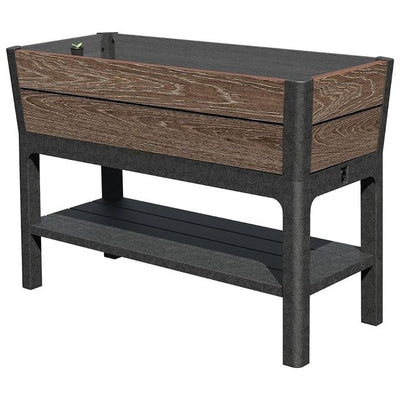
- Planters in sets of two in rectangular, square and low shapes (Keter).
- Wrought-iron flower stands, wall-mounted, with one or two tiers, or bicycle-shaped (Vigor).
- Pot holders and planters with wooden trellis (Verdelook), as well as saucers and other catalogue items.
How to choose
Consider the size in relation to the plant and the space, the material (stone is heavy and stable, metal and plastic are easier to move), the style and whether there is a saucer or feet that lift the base off the ground.
For stone or tuff pots and for large planters it is best to decide on the final position before installation, because once filled with soil they become very heavy. For year-round outdoor use, check that the material is suited to temperature swings.
For supplies of several pieces or for public areas, write to or call AMES: we work on a quotation basis.
Active filters:
Products in this collection
In your quote
In compare
 In your quote
In compare
 In your quote
In compare
 In your quote
In compare
 In your quote
In compare
 In your quote
In compare
 In your quote
In compare
 In your quote
In compare
 In your quote
In compare
 In your quote
In compare
 In your quote
In compare
 In your quote
In compare
 In your quote
In compare
 In your quote
In compare
 In your quote
In compare
 In your quote
In compare
 In your quote
In compare
 In your quote
In compare
 In your quote
In compare
 In your quote
In compare
 In your quote
In compare
 In your quote
In compare
 In your quote
In compare
 In your quote
In compare
Frequently asked questions: Planters and Pots
What are planters and pots for gardens and terraces used for?
They are used to furnish terraces, balconies, gardens and public spaces with plants and flowers, even where there is no soil. A reconstituted stone pot gives a solid look, while a treated-wood planter suits a more natural garden. Choose size and material according to the space available and the type of plant.
Wooden planter or reconstituted stone pot: what is the difference?
The treated-wood planter, such as the rectangular 90x40x30 cm Verdelook planter, is light and easy to move, but must be protected from prolonged damp. The reconstituted stone pot is heavier and more stable, and withstands weather well. Consider the weight, the outdoor durability and how easily it can be moved.
How do you choose pots and planters for a balcony?
On a balcony the weight matters: a large pot filled with soil and water can be very heavy, so choose lightweight materials or planters of modest size. Check that the pot has drainage holes and use a saucer to protect the floor. Check the dimensions on the data sheet to be sure it fits the space available.
How do you fix a wrought iron wall planter bracket?
Wall planter brackets, with one or two levels, hold the pots without taking up floor space. Fix them with plugs suited to the type of wall, checking that the substrate can bear the weight of the pot with soil and water. Before drilling, check for services hidden in the wall. For external walls, choose screws and plugs resistant to damp.
Which pots should be chosen for an open public space?
In open public spaces, choose sturdy, stable pots with a shape and weight that do not create risks of falls or impacts. Rectangular or square planter sets help delimit flower beds and paths. Check the resistance of the material to impacts and continuous use, and consider periodic maintenance.
Why must a pot have drainage holes?
The pot must have holes in the base to let out excess water, otherwise the roots rot. A layer of expanded clay on the base helps drainage, and the saucer collects the water that flows out. For pots without holes you can use the double-pot method, with the plant in a removable inner pot.
How do you clean and maintain an outdoor reconstituted stone pot?
Reconstituted stone withstands weather well, but over time moss or limescale can appear. Clean with water and a soft brush, avoiding aggressive products that can alter the surface. In frosty periods, empty the saucers of water to avoid cracks caused by ice.