
 In your quote
In compare
Professional Tape Measures
31 products
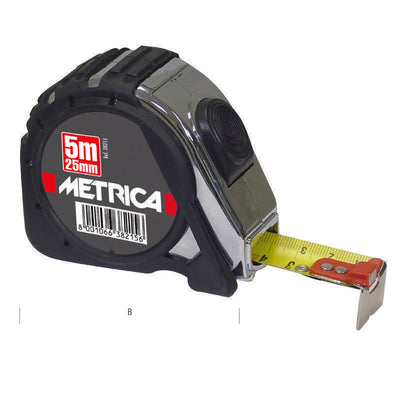
Metrica-brand tape measures for measuring on site, in the workshop and on maintenance jobs, in different blade lengths and widths.
Models in the collection
- Compact tape measures from the Mini series, handy to keep in a pocket.
- Just-in tape measures, with a sturdy case and exposed blade.
- Tape measures with a self-locking blade (Self locking), which holds the measurement once the blade has been pulled out.
How to choose
The length of the blade in relation to your working measurements matters, as does its width: wide blades stand out better unsupported, narrow ones are more compact. The blade lock helps when measuring alone.
The models differ in blade length, case size and the presence of a lock. For everyday use on site a sturdy case is best; for marking out, the legibility of the scale and the accuracy are what count.
To choose the model and receive an offer, write to or call AMES: the supply is set up by quotation.
Active filters:
Products in this collection
In your quote
In compare
 In your quote
In compare
 In your quote
In compare
 In your quote
In compare
 In your quote
In compare
 In your quote
In compare
 In your quote
In compare
 In your quote
In compare
 In your quote
In compare
 In your quote
In compare
 In your quote
In compare
 In your quote
In compare
 In your quote
In compare
 In your quote
In compare
 In your quote
In compare
 In your quote
In compare
 In your quote
In compare
 In your quote
In compare
 In your quote
In compare
 In your quote
In compare
 In your quote
In compare
 In your quote
In compare
 In your quote
In compare
 In your quote
In compare
Frequently asked questions: Professional Tape Measures
What is a professional tape measure used for on a building site?
The tape measure is the most widely used measuring tool on building sites, in workshops and in maintenance: it is used to take the dimensions of rooms, openings, parts and equipment. The tape coiled inside a compact case allows you to measure even in tight spaces and with one hand. For precise measurements over long distances, it is better to use a folding rule or a dedicated measuring instrument.
Tape length and width: how do I choose?
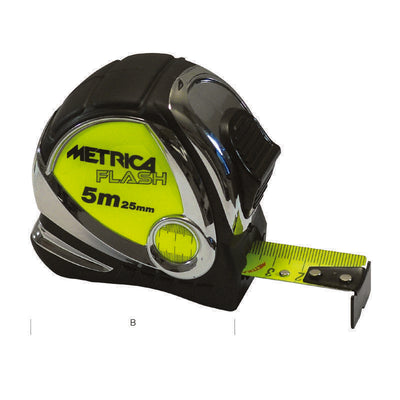
Think about the length you need most often, because a short tape forces you to measure in several stages. The width affects rigidity: wide tapes stay straight over greater distances, while narrow ones are more compact in the pocket. In the titles you will find models such as XL, Wing Shape and Flash, but the name does not give the dimensions: read the tape length and width on the product page.
What is a self-locking tape measure for?
The self-locking tape holds the measurement once pulled out, even when you let go of the tape, so you can read the value with both hands free. It is useful for measuring alone on walls or for transferring a dimension without risking the tape retracting. The lock is engaged by a button or lever on the case. Try it before using it for an important measurement.
Tape measure with magnet or rubber case: when do you need one?
The model with a strong magnet attaches the tape hook to metal parts, useful for measuring alone on steel doors or profiles. Versions with a rubber case offer a more comfortable, non-slip grip. The self-locking rubber model combines the soft grip with the tape lock. Choose according to the job: magnet for measurements on metal, rubber for a secure grip in the hands.
ABS, chrome or nylon-coated tape measure: what is the difference?
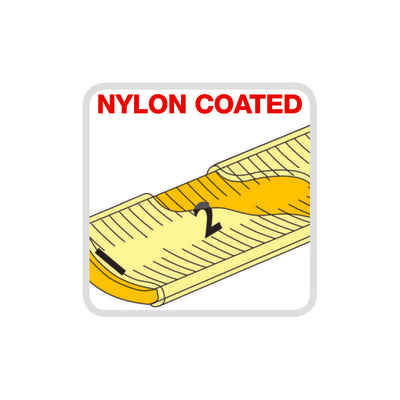
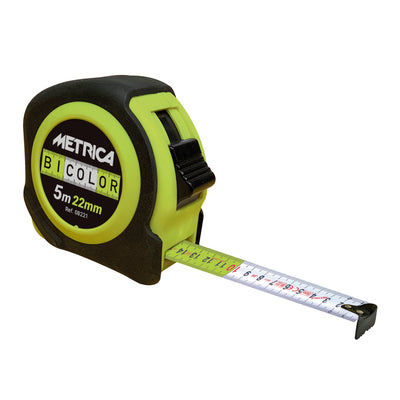
The ABS case is light and suited to everyday use and the pocket. The chrome version has a more refined metallic finish. The nylon-coated tape resists abrasion and dirt better than a bare tape. Among the titles you will also find the two-colour tape, which helps you read the measurements more clearly. Choose according to the job and the durability you need.
Tape measure or folding rule: when should I use each?
The tape measure goes in your pocket and extends with one hand, ideal for quick measurements and for parts of irregular shape. The rigid folding rule is more stable on horizontal surfaces and for transferring dimensions accurately. Over long spans the tape can bend if it is not taut, while the rule keeps the line straighter. Choose according to the type of measurement you take most often.
How do you read and use a tape measure without errors?
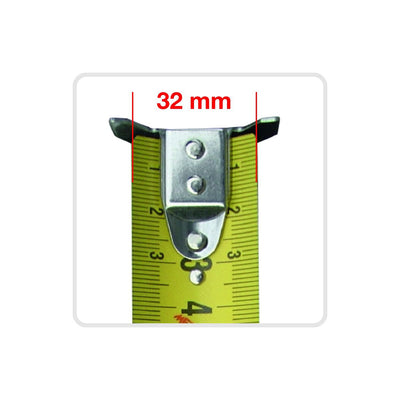
Hook the end of the tape on the edge of the piece and check that the hook is not bent or loose, because the sliding hook compensates for its own thickness. Keep the tape in a straight line, without twisting it, and read the measurement looking perpendicular to the graduation. On long measurements, ask a colleague to hold the other end still. Retract the tape slowly so as not to damage the return mechanism.