
 In your quote
In compare
Rubi
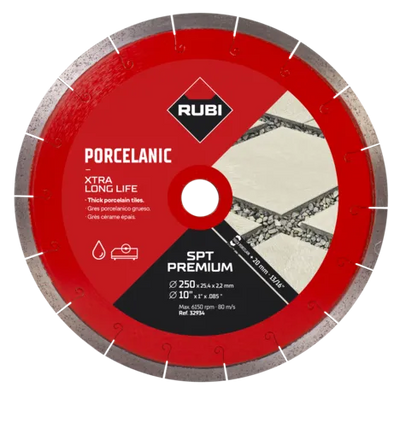
SPT Premium segmented diamond disc for porcelain stoneware Rubi
Code disco-diamantato-segmentato-per-gres-porcellanato-
52 products
Ceramic cutting discs are used to cut tiles, porcelain stoneware and other hard coverings with clean cuts and minimal chipping. They are used by fitters and tilers with an angle grinder or an electric tile cutter.
The collection includes products by Sea Technology, Vigor and Unifix.
Choose the diameter and bore to suit the machine and check that the maximum rpm marked on the disc is not lower than that of the tool. For thinner or more valuable tiles prefer the continuous rim; for porcelain stoneware and long cuts turbo discs are suitable. If the disc is marked for wet use, use it with water as the manufacturer specifies.
For a quotation or help with your choice, contact AMES Srl: we will suggest the solution suited to your job and tell you what is available.
In your quote
In compare
 In your quote
In compare
 In your quote
In compare
 In your quote
In compare
 In your quote
In compare
 In your quote
In compare
 In your quote
In compare
 In your quote
In compare
 In your quote
In compare
 In your quote
In compare
 In your quote
In compare
 In your quote
In compare
 In your quote
In compare
 In your quote
In compare
 In your quote
In compare
 In your quote
In compare
 In your quote
In compare
 In your quote
In compare
 In your quote
In compare
 In your quote
In compare
 In your quote
In compare
 In your quote
In compare
 In your quote
In compare
 In your quote
In compare
For ceramic and porcelain tiles you need diamond discs, because the material is too hard for a standard abrasive wheel. Choose the disc according to the type of tile and the tool, either an angle grinder or an electric tile cutter. The collection includes continuous-rim discs, turbo discs and thin cutting wheels, each designed for a different type of cut.
The continuous-rim disc has an unbroken edge and gives the cleanest cut, so it suits delicate tiles and visible cuts. The turbo disc has a continuous serrated profile and cuts faster, and it is better suited to porcelain tiles. If a clean cut matters most, choose the continuous rim; if speed matters most, choose the turbo.
For porcelain tiles the collection offers discs designed for this material, for example the Rubi SPT Premium segmented porcelain disc and the Rubi CPC continuous porcelain disc. It is worth checking in the title or product sheet that the disc is rated for porcelain. Also choose the model according to the machine you will use.
Yes, there are diamond discs designed for cutting ceramic with an angle grinder, such as the Ø 115 mm diamond disc for ceramic. Before fitting it, check that the diameter suits your grinder and that the maximum speed marked on the disc is equal to or higher than that of the machine. Always use the guard, safety glasses and gloves.
To reduce chipping, use a continuous-rim disc, feed the cut steadily without forcing it and keep a constant speed. On more fragile tiles the continuous edge gives the cleanest result. If the disc and the tile cutter allow it, you can also wet the cutting line to cool the disc.
The collection includes discs in different diameters. For example, the Ø 115 mm diamond disc for ceramic for the angle grinder and the Vigor 180x22 mm continuous-rim disc for ceramic. Choose the size according to your machine, and the mounting bore must match the machine's spindle. Check the diameter and bore on the product sheet before fitting the disc.
Tile fitters and tilers use them to cut tiles, porcelain and wall and floor coverings when refurbishing bathrooms and kitchens, where made-to-measure cuts are needed around sockets, drains and corners. They are also useful on site to adapt the tiling to the actual surfaces. Anyone who cuts these materials often chooses the disc according to the type of cut to be made.
We use essential cookies to make the site work, and, only with your consent, analytics and marketing cookies to understand how it is used and to offer you relevant content. You can change your mind at any time. Read the privacy policy
For purchasing offices and MRO buyers
Search by task
Thank you! Your request has reached one of our buyers: we'll reply within 24 working hours with the quote or with any questions needed to complete it.