
 In your quote
In compare
Protractors
18 products
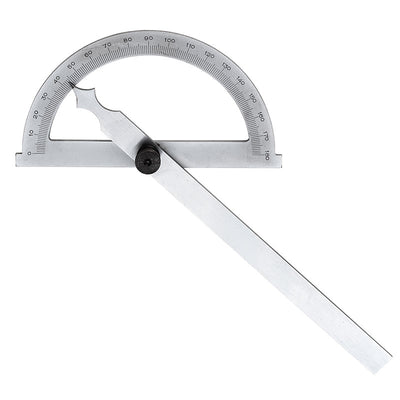
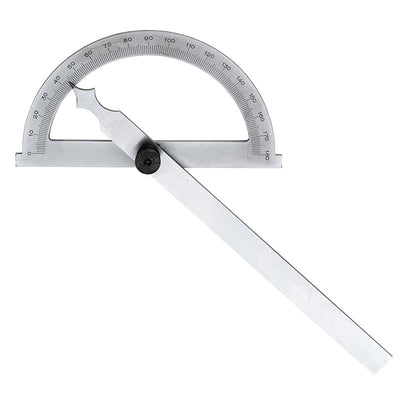
Protractors measure and transfer angles. They are used in workshops, in metal and woodworking and on site, for example for square cuts or particular angles of inclination.
Types available
- Simple protractors, sector type, in steel or stainless steel
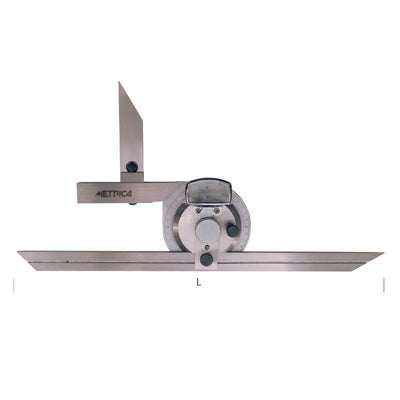
- Universal vernier protractors for more precise measurements
- Digital and electronic protractors, some with a spirit level, such as those by Stanley, Milwaukee and Stabila
How to choose
Choose between an analogue reading, which is simple and needs no batteries, and a digital one, which is quicker and easier to read. Consider the precision the job requires, the length of the arms, the measuring range and the working environment, for example whether the instrument will stay on site or in a laboratory. AMES Srl works on a quotation basis: write to info@amessrl.com or call 051 728529 for availability, delivery times and terms. In your request, state the intended use, the quantities and, if you know them, the make and model you are looking for: this lets us propose the right item first time, check compatibility together and consider any equivalent alternatives.
Active filters:
Products in this collection
In your quote
In compare
 In your quote
In compare
 In your quote
In compare
 In your quote
In compare
 In your quote
In compare
 In your quote
In compare
 In your quote
In compare
 In your quote
In compare
 In your quote
In compare
 In your quote
In compare
 In your quote
In compare
 In your quote
In compare
 In your quote
In compare
 In your quote
In compare
 In your quote
In compare
 In your quote
In compare
 In your quote
In compare
 In your quote
In compare
Frequently asked questions: Protractors
What is a protractor used for?
The protractor measures and transfers angles: it is used to cut square or at a particular angle, to check an angle already made and to transfer an angle onto a piece. It is used in the workshop, in metalworking and woodworking and on site, whenever a cut must have a precise angle.
What checks are needed before using a digital protractor?
Before using a digital or electronic protractor, check that the battery is charged and that the instrument reads zero when the arms are in contact. Incorrect calibration shifts every angle measured. If the instrument has a level, such as the Fervi G008 digital protractor and level with 2 vials, also check that the bubble is centred on the work surface.
Which factors matter when choosing a protractor?
The type of reading, analogue or digital, the length of the arms, the measuring range and the working environment all matter. The simple protractor needs no batteries, while the digital one is quicker and easier to read. The Fervi G006 series has arms of different lengths, such as the G006/600 and G006/120 models: choose according to the piece to be measured.
What is the difference between a digital protractor and a universal vernier protractor?
The digital protractor shows the angle on a display and is quicker to read, but it needs a battery. The universal vernier protractor, such as the Metrica universal vernier protractor, is read on the scale with the vernier, without batteries. It is used when the measurement must be precise and the operator is used to analogue reading.
Which protractor should I choose for working wood or metal in the workshop?
For wood and metal in the workshop, a protractor with long arms and a stable base is best, such as the Metrica sliding-blade protractor or the Metrica 4-in-1 multifunction protractor, which measure different angles with a single instrument. For work on stainless steel, the Metrica stainless steel protractor is recommended.
What is a protractor with a level used for?
The protractor with a level lets you measure the inclination relative to the horizontal. The collection includes the Fervi G008 digital protractor and level with 2 vials and the Stabila TECH 700 DA electronic protractor. It is useful for setting slopes on site, for example for a shelf or a ramp, checking the angle on the piece before fixing it.
How do I use a protractor to transfer an angle onto the piece?
Rest the base of the protractor on a reference edge, align the arm with the edge of the piece and lock the measurement before reading. To transfer an angle, first mark the reference line and then the angle, and check the result with a second pass. Keep the instrument clean, with no swarf on the work surface.