
 In your quote
In compare
Cold Chisels
23 products
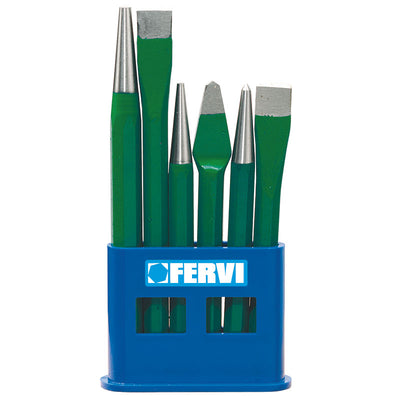
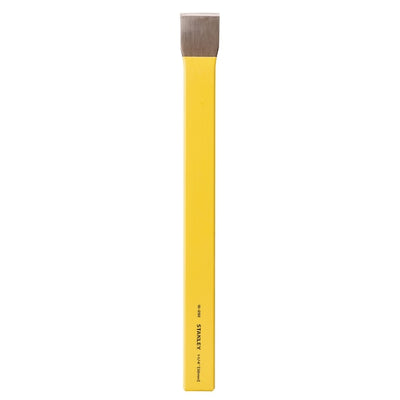
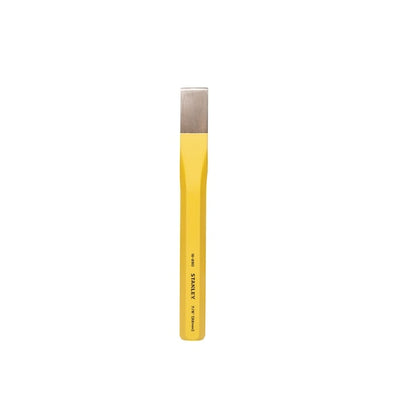
Mechanics' chisels, also called cold chisels, are steel tools with a flat cutting edge used to work metal by hand, struck with a hammer: cutting thin sheet metal, splitting rivet and bolt heads, roughing and deburring castings and welds. In the AMES catalogue you will find chisels from Stanley and Fervi, single or in assortments.
Types included in the collection
- Flat cold chisels: in various widths and lengths, for cutting and roughing.
- Assortments: sets combining chisels and punches or nail punches, stored in a pouch or on a rack.
How to choose
Choose the width of the cutting edge according to the job: narrow for precision and deep cuts, wide for roughing surfaces. Consider the length, to keep your hand at a safe distance from the point of impact, and if possible use a hand guard. An assortment is handy when the jobs are varied.
For availability and advice on choosing, request a quote from AMES: we work only on a quote basis and will help you put together the right supply for your job.
Active filters:
Products in this collection
In your quote
In compare
 In your quote
In compare
 In your quote
In compare
 In your quote
In compare
 In your quote
In compare
 In your quote
In compare
 In your quote
In compare
 In your quote
In compare
 In your quote
In compare
 In your quote
In compare
 In your quote
In compare
 In your quote
In compare
 In your quote
In compare
 In your quote
In compare
 In your quote
In compare
 In your quote
In compare
 In your quote
In compare
 In your quote
In compare
 In your quote
In compare
 In your quote
In compare
 In your quote
In compare
 In your quote
In compare
 In your quote
In compare
Frequently asked questions: Cold Chisels
What are mechanic's cold chisels used for?
Mechanic's chisels, or cold chisels, are steel tools with a flat cutting edge that are worked by hand, by striking them with a hammer. They are used to cut thin sheet metal, to split rivet and bolt heads, to rough out castings and to remove burrs from welds. They are workshop, mechanical maintenance and assembly tools.
What chisel width should I choose for cutting sheet metal or roughing out?
Choose the width of the cutting edge according to the job. A narrower chisel gets into tight spots better, while a wider one covers more surface and removes more material with each blow. For cutting thin sheet metal a thin cutting edge is best, while for roughing out castings and welds a sturdier edge is needed. Also choose the length according to the distance from the work point.
Single chisels or an assorted set: which is better?
An assorted set suits anyone who changes jobs often, because it combines chisels with points or nails, stored in a case or holder, ready to use. A single chisel is for replacing a worn piece or covering a specific job. Check whether the set includes the shapes you really need, otherwise you risk having unused pieces in the workshop.
How do you use a cold chisel without getting hurt?
Wear safety glasses, because metal chips can fly off when you strike. Hold the chisel with a firm but not rigid grip and strike in line with it. Check the head often: if it has mushroomed, it must be ground down or replaced, because fragments can break off. Work with the workpiece firmly clamped, in a vice or on a solid bench.
What is the difference between a chisel, a punch and a scriber?
A chisel has a cutting edge and is used to cut or rough out metal. A punch has a point and is used to mark the centre of holes, to centre, or to drive out a pin. The scriber is used to scribe fine lines on metal. The catalogue includes sets combining chisels, punches and a scriber, useful for those who work on several fronts.
When should hand chisels be used instead of a power tool?
A hand chisel is useful where a power tool cannot reach or is too bulky: deburring, precision work in tight areas, cutting small sheets and removing residues. For large volumes of material a power tool is better. The hand chisel needs more care, so it is the right choice when the job is small and specific.
What materials can a cold chisel be used on?
A cold chisel works well on steel, iron and cast iron, where a sturdy cutting edge is needed. On wood or soft materials a chisel is used differently and with other tools. Before working, check the hardness of the workpiece: a material that is too hard can chip the cutting edge, while one that is too soft can deform under the blows.