
 In your quote
In compare
Plasterboard and Insulation Fixings
207 products · Heavy-Duty Anchors
Plasterboard and insulation fixings are used to fasten light and medium loads where the wall is not solid: plasterboard sheets, cavity walls, suspended ceilings and external thermal insulation (ETICS) facades. Here the fixing has to work in a hollow or soft substrate, so different systems are used from masonry plugs.
Types available
- Expansion plugs for plasterboard, in nylon or metal
- Self-drilling screw plugs, which do not require a pilot hole
- Toggle and butterfly plugs, which open out behind the board
- Plugs with hook for suspended ceilings and hanging loads
- Insulation plugs with washer plate, for fixing insulation panels
- Spacer fixings for insulated facades
How to choose
Start with the substrate: single or double board, insulation thickness, type of wall beneath the external insulation. Then consider the load: heavy objects must be anchored to the structure and not to the board alone. The length of the plug must allow for the thickness of insulation it has to pass through.
The catalogue includes products from Fischer, Bossong, SPIT, DeWalt, Unifix and other brands. For sizes and quantities, request a quotation from AMES Srl.
Active filters:
Products in this collection
In your quote
In compare
 In your quote
In compare
 In your quote
In compare
 In your quote
In compare
 In your quote
In compare
 In your quote
In compare
 In your quote
In compare
 In your quote
In compare
 In your quote
In compare
 In your quote
In compare
 In your quote
In compare
 In your quote
In compare
 In your quote
In compare
 In your quote
In compare
 In your quote
In compare
 In your quote
In compare
 In your quote
In compare
 In your quote
In compare
Unifix
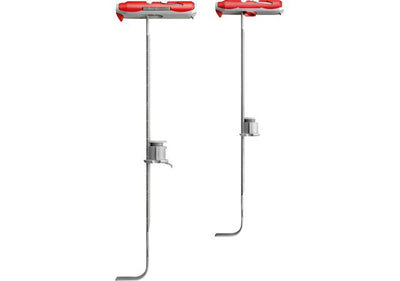
Plug with hook, no spring, 13mm opening, Unifix
Code unifix-con-gancio-senza-molla-apertura-13mm
 In your quote
In compare
 In your quote
In compare
 In your quote
In compare
 In your quote
In compare
 In your quote
In compare
Frequently asked questions: Plasterboard and Insulation Fixings
How do you hang something on a plasterboard wall?
Use plugs made for plasterboard, which work behind the board rather than in the void, such as toggle, butterfly or expansion plugs. The load should be kept light or medium and spread over several points. For heavier loads, such as wall-hung furniture or sanitaryware, the fixing must go into a cross-bar or metal profile of the frame.
Toggle, butterfly or self-drilling: which should I choose?
Toggle and butterfly plugs open behind the board and hold thanks to their bearing surface, useful for medium loads. Self-drilling screw plugs need no pilot hole and are quick for light loads. Expansion plasterboard plugs are a middle option, to be chosen according to the weight and the board thickness.
How are external wall insulation boards fixed?
The ETICS plug passes through the insulation board and anchors into the wall, with a wide head that holds the board against the wall. The catalogue has models for insulation such as FID, DE and Thermax, as well as snap-in or duotec anchors for different boards. The number of plugs per square metre is given by the insulation design.
How do I choose the length of an insulation plug?
The length must cover the thickness of the insulation board plus the anchoring depth in the wall stated by the manufacturer. If the insulation is thick, a longer plug is needed and sometimes a spaced fixing, which keeps the board away from a weak area. Measure the actual insulation thickness first, not the design thickness.
Which plugs are used for hollow or partition walls?
For hollow and partition walls the catalogue offers DeWalt Legs and Zip-It plasterboard plugs, and DeWalt anchors for hollow walls. They are designed to work in a cavity, with a system that expands behind the board without breaking through it. Choose the model according to board thickness and load.
Who uses these plugs?
They are used by plasterboard installers, ceiling fitters, services installers in partition walls, thermal insulation installers for external insulation, and technicians fixing appliances or ducts to walls that are not solid. The work requires care, because the base is more fragile than a masonry wall and a mistake with the load can cause the board to fail.
How do I avoid damaging the plasterboard?
Use a suitable bit, drill at the exact point and to the diameter stated, then insert the plug without forcing the board. Do not overtighten the screw beyond what is needed, as it can punch through the plasterboard and lose its holding. Before hanging a weight, test the fixing with a reduced load to see how it behaves.
What maximum load can I hang on plasterboard?
There is no single value, because it depends on the type of plug, the board thickness and the number of fixing points. The capacity is stated in the manufacturer's data sheet and must be respected with a safety margin. For heavy loads, it is better to fix to a profile or steel cross-bar of the frame, rather than to the board alone.