
 In your quote
In compare
Wood Handsaws
18 products
The handsaw is the hand saw with a wide, rigid blade used to cut wood, boards, joists and panels: it is used in joinery, in carpentry work and on site, when it is not necessary or convenient to use a power tool.
What you will find in the collection
- Joiner's handsaws: steel blades with ergonomic handle, also bi-material.
- Different lengths: from short models of 350 mm to those of 500 mm.
- Different tooth pitches: models with a higher or lower number of teeth per inch.
How to choose
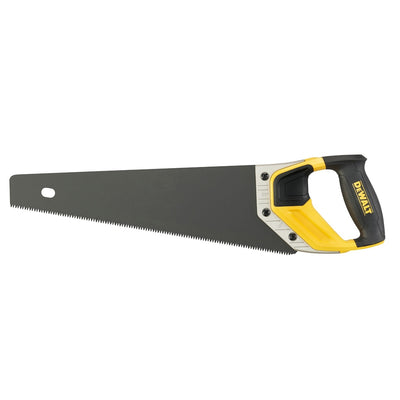
More teeth per inch mean a finer, cleaner cut, fewer teeth a faster but coarser cut. The length of the blade should be chosen according to the size of the pieces to be cut. Brands available include Stanley, DeWalt, Fervi, Vigor.
Items are supplied on quotation: tell us the product, quantity and intended use and we will reply with the most suitable proposal, indicating availability, delivery times and terms of supply.
Active filters:
Products in this collection
In your quote
In compare
 In your quote
In compare
 In your quote
In compare
 In your quote
In compare
 In your quote
In compare
 In your quote
In compare
 In your quote
In compare
 In your quote
In compare
 In your quote
In compare
 In your quote
In compare
 In your quote
In compare
 In your quote
In compare
 In your quote
In compare
 In your quote
In compare
 In your quote
In compare
 In your quote
In compare
 In your quote
In compare
 In your quote
In compare
Frequently asked questions: Wood Handsaws
What is a wood handsaw used for?
A wood handsaw is used to cut boards, joists, battens and panels by hand, with a wide, rigid blade. It suits joinery, carpentry and site work, when the cut is short, the piece is already in position or there is no socket for a power tool. For long or repeated cuts a power saw is still faster.
Do hand saws need checks before use?
For handsaws the practical requirement is maintenance. Italian Legislative Decree 81/2008 on workplace safety requires equipment to be kept in good working order, so a cracked blade, a broken tooth or a loose handle must be replaced before use. Check the blade and the handle fixing before every job, especially after a drop.
Which factors matter when choosing a handsaw?
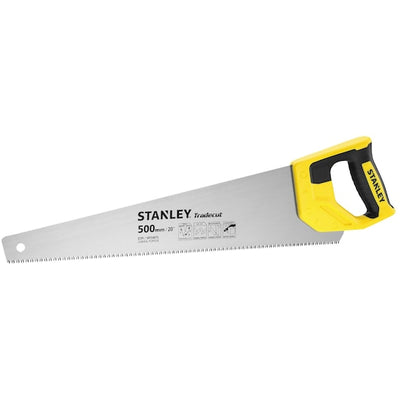
The main factors are blade length, the number of teeth per inch and the type of handle. More teeth per inch give a fine, clean cut, while fewer teeth cut rough timber faster. The models include 350 mm blades, such as the Vigor Standard 350 mm carpenter's handsaw, and 500 mm blades, such as the Stanley Tradecut 500 mm handsaw with 7 teeth per inch.
What is the difference between a bi-material handsaw and a standard one?
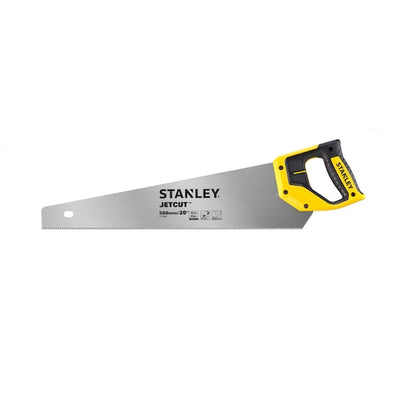
The term bi-material indicates a blade made of two different materials, usually a harder tooth on a more flexible body. The collection includes the Stanley Jet Cut Bi-Material handsaws, with finer teeth in the Fine versions, and the versions with coarser teeth, as well as models with an ergonomic handle. Compare the tooth pitch given on the product page.
How do I use a handsaw safely?
Secure the piece in a vice or with a clamp so that it does not move during the cut, and keep your knee and foot away from the cutting line. Start with short, controlled strokes, use the whole length of the blade and let the weight of the tool do the work without forcing it. Wear gloves and glasses if the wood produces splinters.
Which handsaw should I choose in joinery for solid wood?
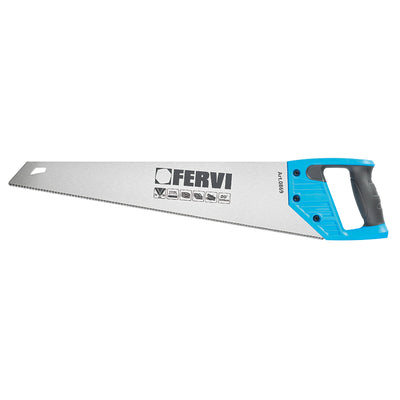
For solid wood a blade with coarser teeth is best, as it cuts faster, whereas for precision cuts and for panels finer teeth are preferred, which leave a clean edge. The collection includes the Fervi 0869 carpenter's handsaw and the Vigor HR-450 450 mm carpenter's handsaw, to be compared by length and tooth pitch before choosing.
Which saws do I need to cut panels?
For panels the collection offers dedicated saws, such as the panel saw item E 162 and the Panel saw, which have fine teeth for a clean cut on the edge. Before cutting, support the panel along its whole length, mark the line with a square and slide the saw with the smooth side resting against the piece to keep the cut straight.