DeWaltCordless reciprocating saw 54V XR FlexVolt 2 x 6 Ah DeWal...Code DCS389T2-QW
Cut wood, metal and plastic and handle demolition cuts with a reciprocating blade.
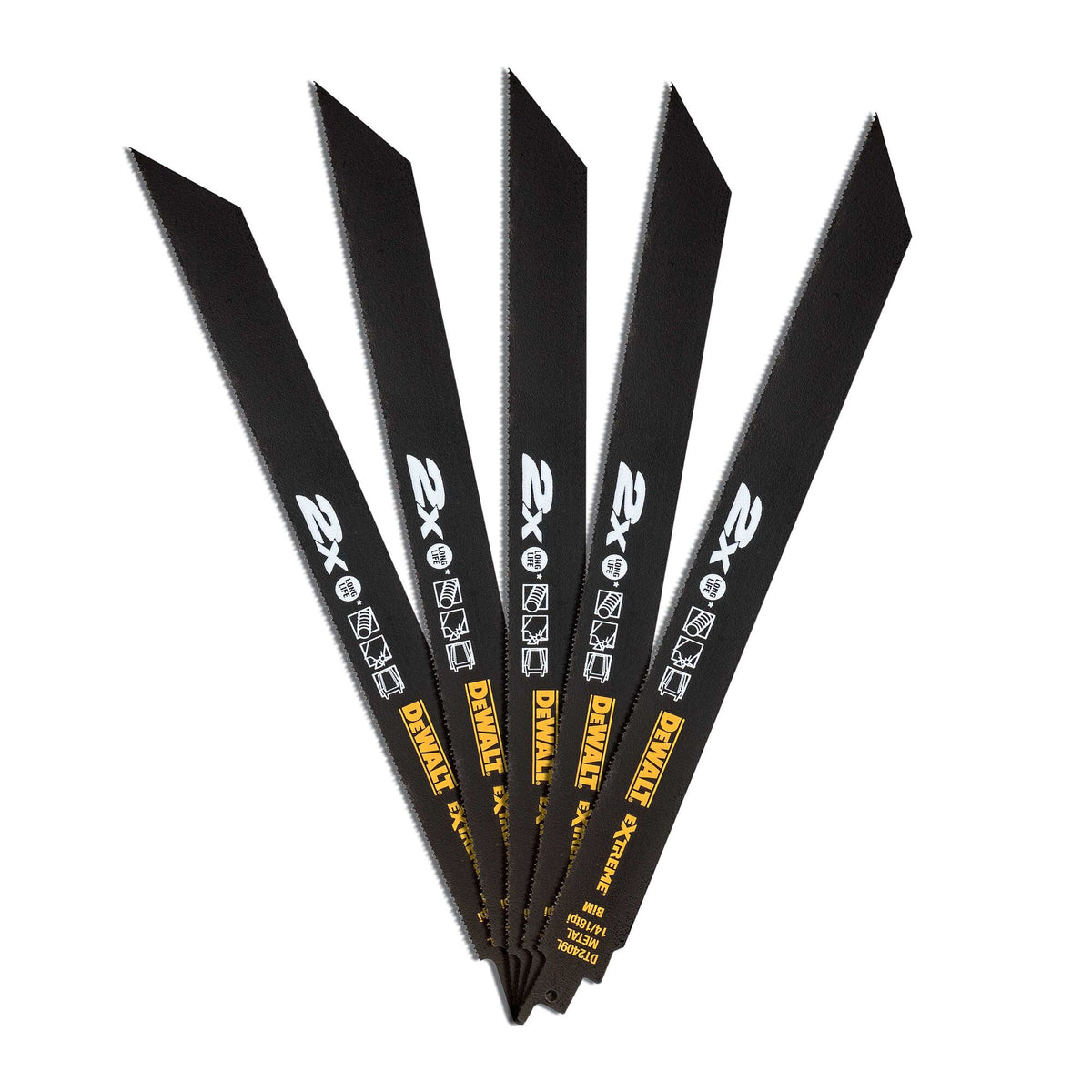
The DeWalt DT2409L-QZ is a 305 mm reciprocating saw blade specific for cutting metals, supplied in a pack of 5 pieces. The generous length allows the largest metal sections to be tackled, while the multipack ensures continuity of work with spare blades always on hand.
A reciprocating saw blade is a straight blade with a universal shank that fits a reciprocating saw for cutting wood, nail-embedded wood, metal, plastic and insulation.
Used for cutting metal sections, sheet and tube and for cutting metal and plastic pipes.
Choose the blade by material and tooth pattern: coarse teeth for wood and demolition, fine teeth for metals, bi-metal for wood with nails. Insert it into the blade clamp with the saw unplugged until it locks, and rest the shoe on the workpiece before starting the cut. Work without forcing and replace the blade when the teeth are worn.
Designed for demolition operatives, electricians, metal fabricators and plumbers.
In your request, please state the length and the quantities required, so we can give you the right quotation first time.
For prices and availability, request a quote from AMES Srl: we will reply with our quotation, delivery times and, where needed, an equivalent technical alternative.
| Application material | Metal |
|---|---|
| Pieces per pack | 5 |
| Length (mm) | 305 |
Everything you need in one place, from functionality to safety.
Cut wood, metal and plastic and handle demolition cuts with a reciprocating blade.
Power and recharge cordless tools of the same system to keep working without stopping.
Protect eyes and face from fragments, dust, splashes and impacts.
Protect hands from abrasion, dirt, liquids and minor cuts while keeping a firm grip.
Protect hearing from the noise of machines and tools by reducing the sound reaching the ear.
We use essential cookies to make the site work, and, only with your consent, analytics and marketing cookies to understand how it is used and to offer you relevant content. You can change your mind at any time. Read the privacy policy
For purchasing offices and MRO buyers
Search by task
Thank you! Your request has reached one of our buyers: we'll reply within 24 working hours with the quote or with any questions needed to complete it.